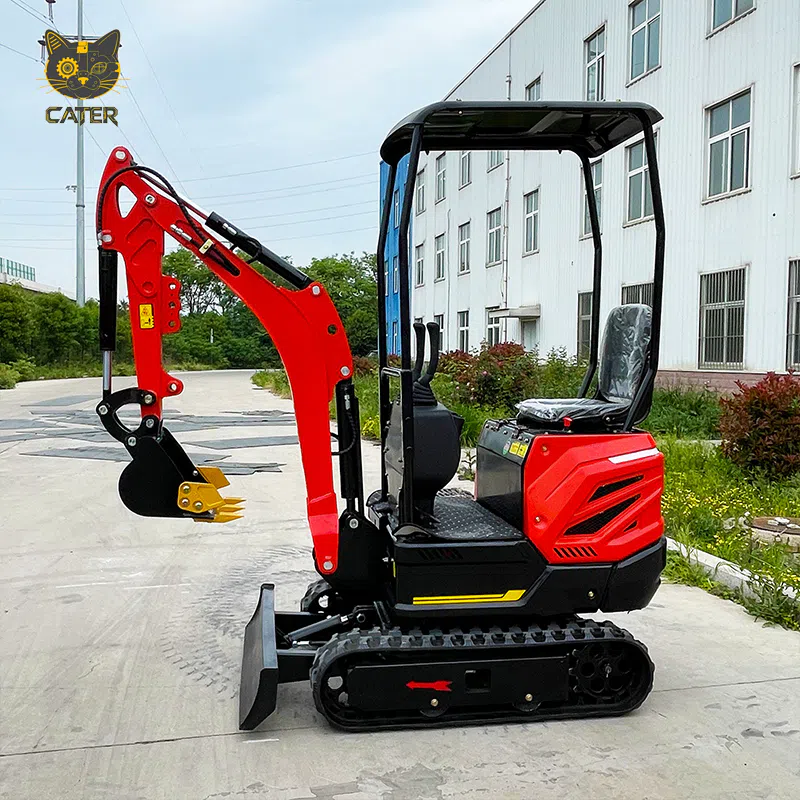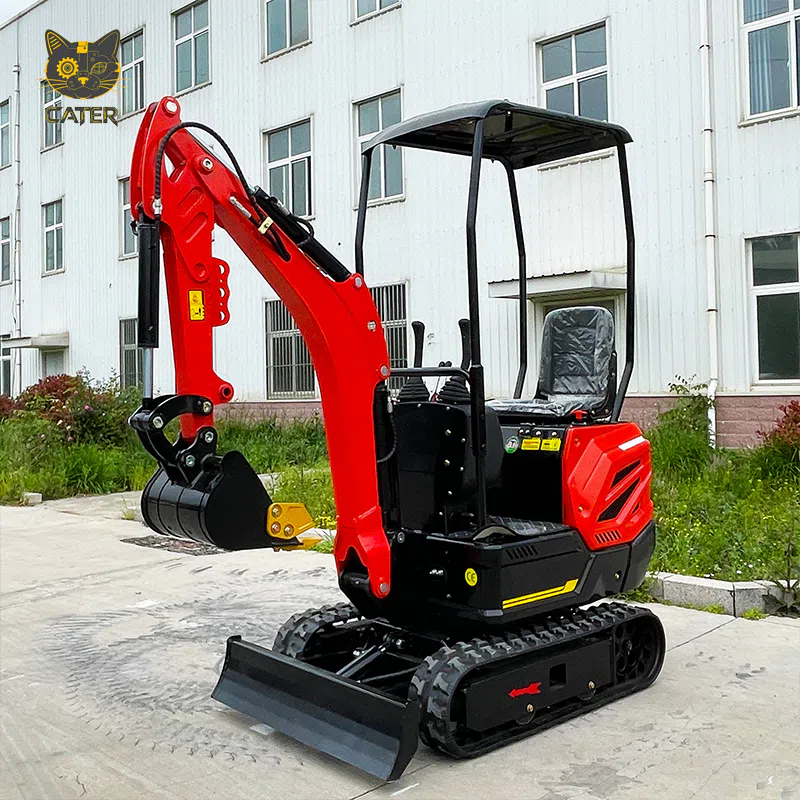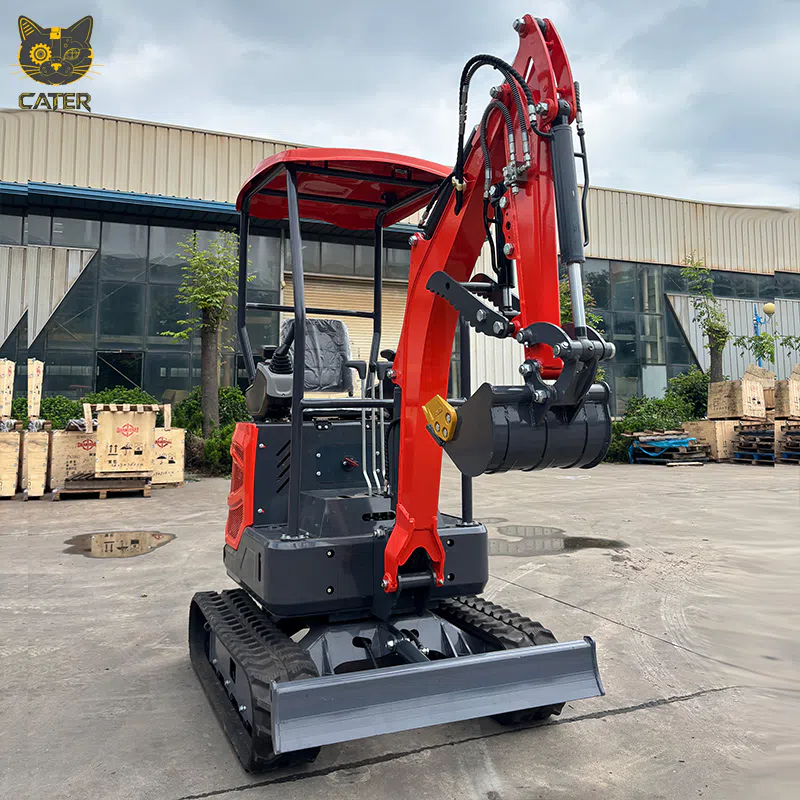
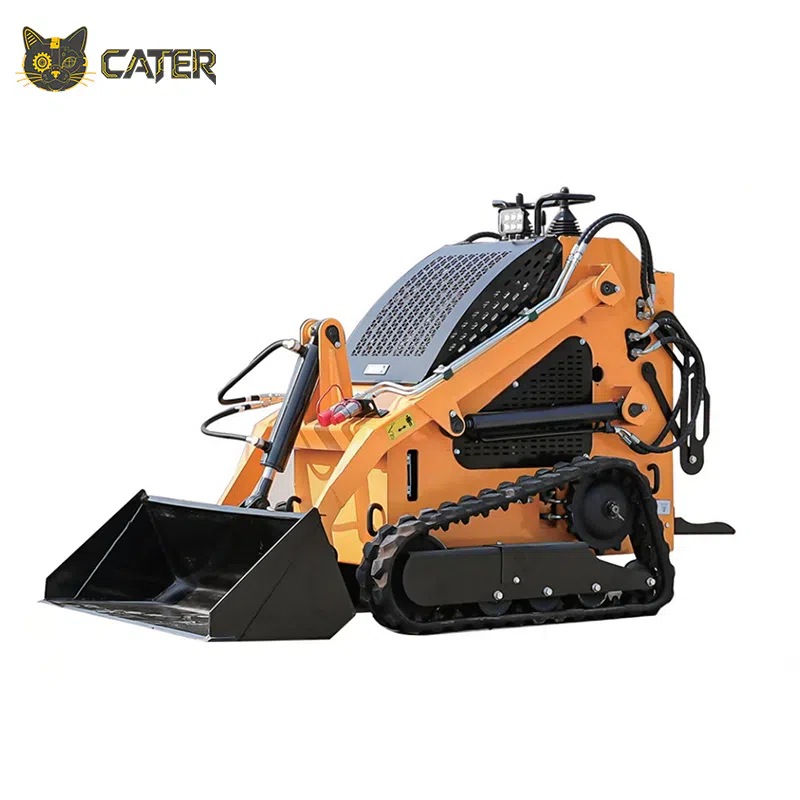
A compact tracked mini loader is specified around the work its attachments will do — the bucket, the forks, the auger or the trencher that turns the machine into a tool. Attachment matching is therefore a decisive part of the specification, and it is a part that can easily be decided on assumptions rather than on verified figures. Three things determine whether an attachment works on a small tracked machine: the hydraulic supply the attachment demands, the load the machine can safely carry, and the clearance the machine can reach when it tips a bucket. Get one of those wrong and a serviceable attachment can end up unusable on the site it was bought for.
The machine behind the attachment
One configuration note, stated once: the product page is filed under a model family and naming that a buyer could associate with more than one configuration, so the exact variant, hydraulic package and attachment mount should be confirmed with the supplier before an attachment is ordered.
Hydraulics decide which attachments are even possible
Attachments are not equal in what they demand from the machine's auxiliary hydraulic circuit. A bucket or a set of forks may place little demand on that circuit, because they do not need a hydraulic motor or a continuous oil supply to do their work, while an auger, a trencher, a brush cutter or a hydraulic breaker can demand substantial, and sometimes continuous, oil flow at a specific pressure. On a compact loader the auxiliary hydraulic supply is finite, and that supply is the real gate on which powered attachments can be run.
The hydraulic questions to put to a supplier are therefore specific: auxiliary flow, relief pressure, single- or dual-acting circuit, coupler and mount pattern, and whether the attachment needs continuous flow. Until those answers exist, no attachment should be treated as approved by default — including a low-demand one — because auxiliary flow, pressure and mount are exactly what the page does not state.
Load limits: machine weight is not rated capacity
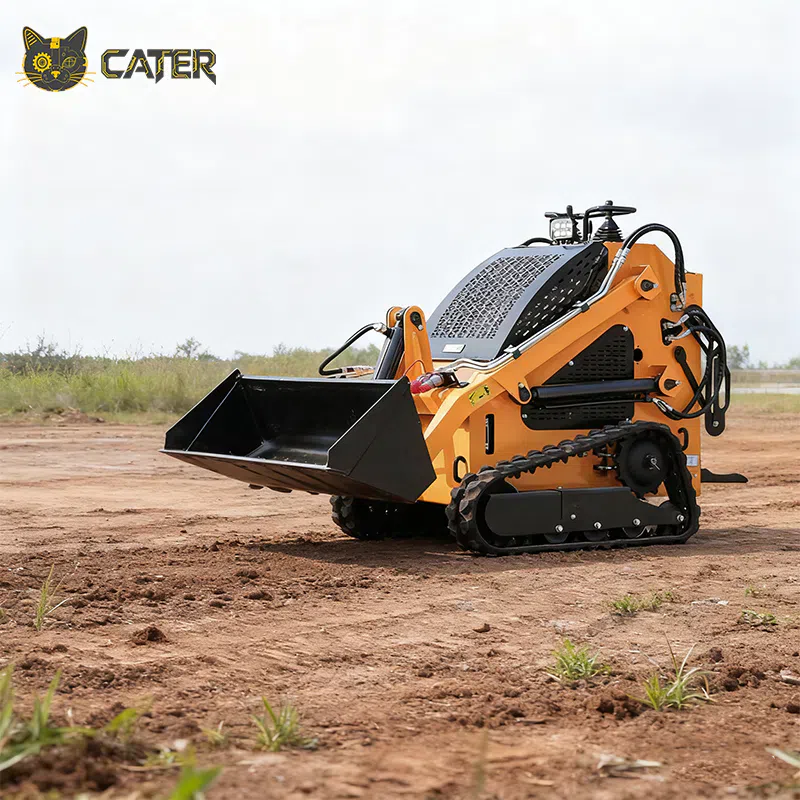
The reference machine weight is the mass of the machine itself. That figure is useful for transport planning and for thinking about ground pressure on soft turf. It is not a payload rating, and it says nothing about what the machine can safely lift or carry in a bucket or on forks. Reading a machine weight as a working load is an easy way for a specification to be misunderstood.
Without a point of application and test conditions, a force figure cannot be translated into a load the machine can carry. Buyers sometimes divide a number like this by gravitational acceleration to manufacture a payload in kilograms, which produces a figure that looks precise and means nothing. Rated operating capacity is a separate limit that accounts for machine stability, load centre and the machine as a whole.
That gap matters to a buyer, and it can only be closed by asking rather than assuming. For a hydraulic auger, a grapple, a set of pallet forks or a bale spike, the usable load depends on the rated operating capacity at the intended load centre, on the attachment's own weight, on where the centre of gravity of the load sits, and on machine stability on the actual ground. None of those are on the page. The honest answer to "how much can this machine lift?" is therefore to ask the supplier for the rated operating capacity at the load centre you intend to use.
If you are still deciding between a wheeled layout and a tracked one before finalising an attachment list, the existing comparison on skid steer loader vs compact track loader covers that choice. Tracked and wheeled are separate configurations with their own published specifications, so the load figures for one should not be applied to the other; each configuration carries its own rating.
Bucket width and the width of the job
The reference bucket width is the width of the bucket, not the overall width of the machine, and it is not by itself evidence that the loader will fit through a particular gate, doorway or side return. Overall machine width, track width and the widest fitted component all bear on access, and the page does not state overall machine width.
Two limits keep this number in its place. First, bucket width is not machine width, and the number of passes a path, a planting bed or a trench backfill takes depends on how the bucket overlaps the ground on each pass and on the material being handled — something a single width figure does not establish. Second, bucket width says nothing about how much material the bucket holds, because the reference page states no bucket capacity with a unit of volume. Access and volume should be planned from measured site dimensions, not from an assumed width figure.
Dumping clearance and reach: reading the geometry figures correctly
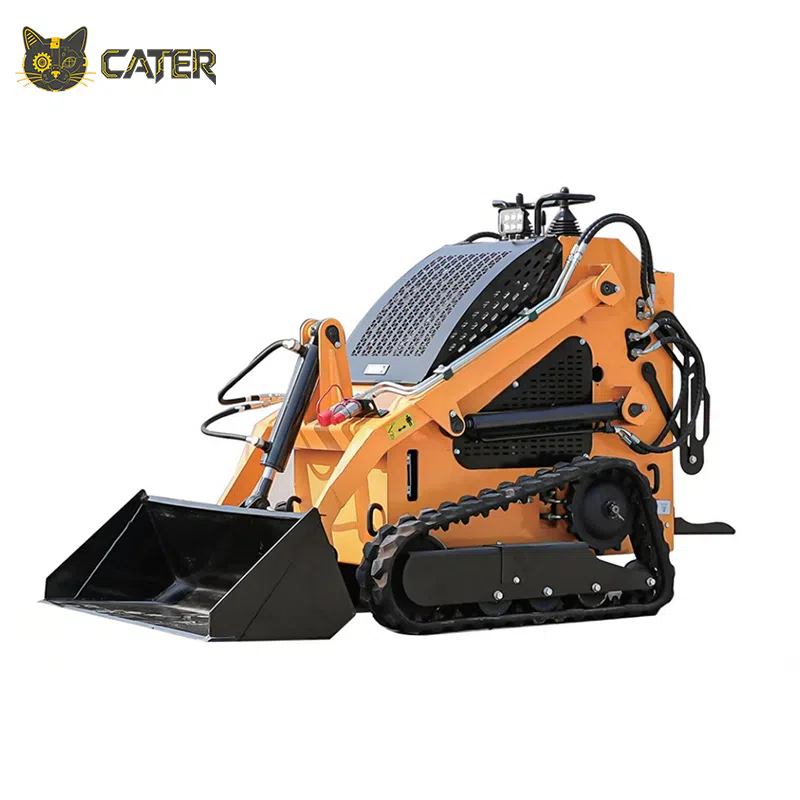
There are 3 reference geometry figures relevant to loading: a maximum working height, an unloading height and an unloading distance. These are three different measurements and they should not be treated as interchangeable. Without that reference, the figures cannot be compared directly with the side height of a trailer or a bin.
Maximum working height describes the top of the working envelope. It is not automatically the hinge-pin height, and it is not the height at which material leaves the bucket. Unloading height and unloading distance describe where the bucket discharges when it is raised into the dump position, and how far forward that point reaches from the machine, but again the measurement reference behind each figure is not given on the page.
For low-sided trailers, small dumpers, bins and spoil heaps, the listed figures give a starting point for planning; they are not a promise that any given truck can be loaded. Dump angle, hinge-pin height, ground conditions and the height of the bed being filled all affect the real result. Where a loading job matters, ask the supplier for the dimension drawing and the hinge-pin height so those measurements can be checked against the actual trailer or bin, rather than extrapolated from a single figure.
Match by machine model, not by a universal table
The clearest habit in this class of machine is to treat the loader and its attachments as one specification package. Applied to any compact loader, that logic means two machines can look alike, take different mounts, deliver different flow and carry different rated loads, so an attachment that suits one can be wrong for another.
Any claim that a specific third-party attachment works on it should come from the supplier's written confirmation, not from a photograph, a marketplace badge or an assumption that small loaders are interchangeable — especially for importers and rental fleets, where one mistaken purchase can multiply across an order.
A matching sequence for fleets and importers
For a rental yard or an importer building a small tracked loader package, the order of work is short and unforgiving.
1. Fix the machine configuration
Confirm the tracked configuration, the hydraulic package and the coupler and mount pattern in writing before anything is ordered.
2. Get the hydraulic numbers
Auxiliary flow, relief pressure, single- or dual-acting circuit and flow requirement — then match the attachment's stated demand, remembering that attachments intended for high-flow machines belong only on high-flow machines.
3. Get the load numbers
Rated operating capacity at the intended load centre, not machine weight and not a force figure.
4. Match the geometry
Compare unloading height, unloading distance and bucket width against the real trailer, bin or access on site, and request the dimension drawing and hinge-pin height where loading precision matters.
Each is a question a supplier can answer exactly — none should be answered by inference from a brochure.
Frequently asked questions
Can I use any skid steer attachment on a small tracked loader?
Not automatically. Mounting pattern, coupler type, hydraulic flow and required pressure vary between machines, and an attachment built for a larger or high-flow machine may not function on a compact one. Confirm each attachment against the specific machine rather than against a generic label.
What hydraulic details do I need before buying an attachment?
Ask for auxiliary hydraulic flow, relief pressure, whether the circuit is single- or dual-acting, the coupler and mount pattern, and whether the attachment needs continuous flow. The reference product page does not list auxiliary flow or pressure, so these answers must come from the supplier for the exact configuration being quoted.
The spec sheet lists a maximum lifting force. Does that give me my payload?
No. The listed 4.5 kN is a force measurement, and the page does not state its point of application or the test conditions behind it, so it cannot be converted into a payload. Usable load is governed by rated operating capacity, attachment weight, load centre and machine stability. Ask for the rated operating capacity instead, and state the load centre you intend to work at.
Will the listed unloading height clear my truck or trailer?
It is a useful starting point for low-sided trailers and bins. Real loading also depends on dump angle, hinge-pin height, ground conditions and the height of the bed being filled, so compare the actual measurements and confirm with the supplier rather than checking a single figure against a truck wall. Ask for the dimension drawing so the measurement references are clear.
Talk to us about your attachment set
If you are specifying a compact tracked mini loader and a matched attachment package, send the configuration you need and the attachments you plan to run to info@caterequipment.com.cn. Include the machine variant, the hydraulic demand of each attachment, and the trailer, bin or truck height you need to load; the matching can be checked against the real numbers instead of assumptions. Small loaders are specified around their attachments, so it is worth getting the hydraulics, the load limits and the dumping clearance right before the order is placed.