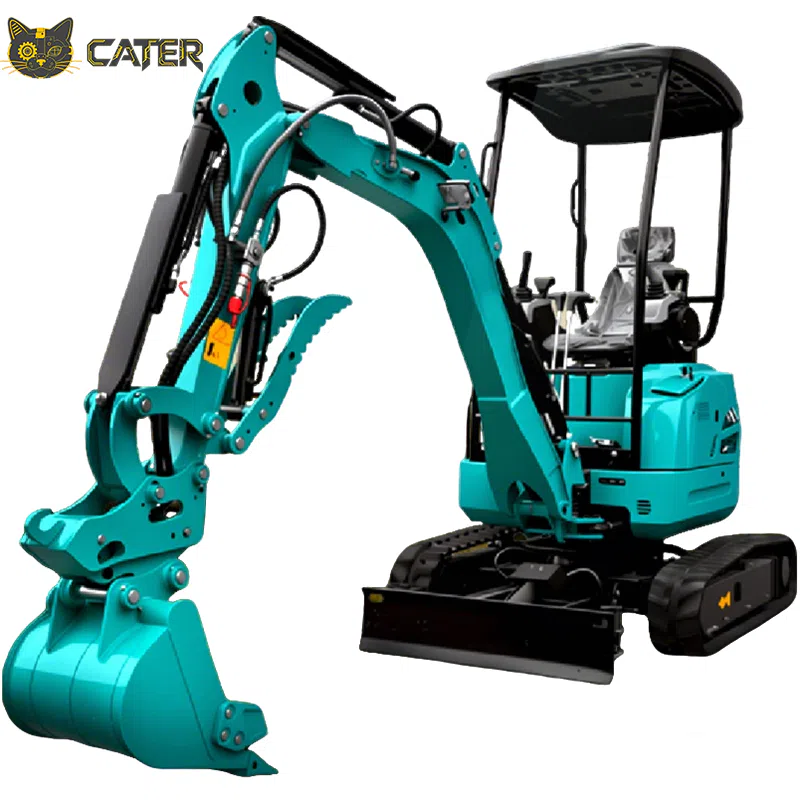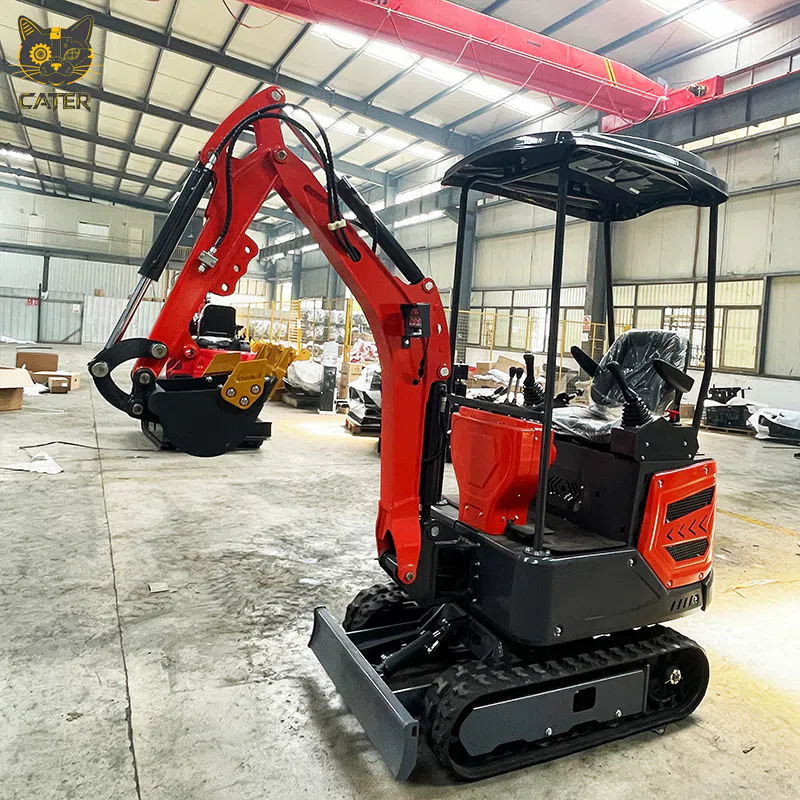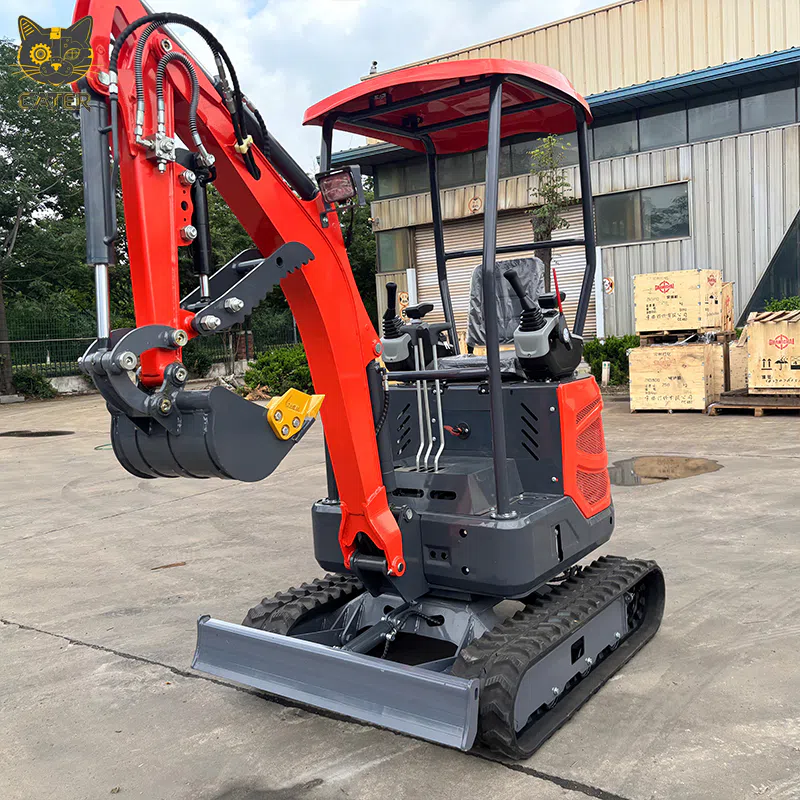


A drainage project needs more than a machine that can reach the proposed trench depth. Pipe levels, existing services, spoil storage and access all influence where excavation can take place. For contractors considering a 1.3-ton mini excavator, the useful starting point is the excavation envelope: the depth, reach and working space required to complete the designed run. Bringing these requirements into one job brief helps identify questions before equipment arrives, without treating a compact machine as permission to dig anywhere.
Begin With the Drainage Design, Not the Machine
Read the drawing as a set of constraints
A drainage drawing is best treated as a set of constraints rather than a wish list. Invert levels, pipe diameter, required cover, gradient and connection points together dictate how deep and how long the run has to be. Where the run passes a boundary, a doorway, a road crossing or an existing chamber, the design also fixes where the machine must sit and where the trench must be entered. Reading the drawing first tells you whether the excavation envelope is short and deep, long and shallow, or shaped around an obstruction — three very different jobs for a small excavator.
Turn the design into a job brief
The brief is the bridge between the drawing and the site. It should state the entry and exit route for the machine, the working width available beside the trench, where excavated spoil will be stockpiled, where pipe and bedding material will be stored, and where people can stand clear of the bucket and of the open excavation. It should also name who is competent to inspect and supervise the work, and how the trench will be supported while it is open. On compact jobs the brief can be short, but it needs to be written down, because drainage work can go wrong when an assumption goes unstated — that the neighbour's wall is far enough away, that the ground will hold, that the service is not where the drawing says — rather than because of a missing machine.
What a Spec Sheet Can and Cannot Settle
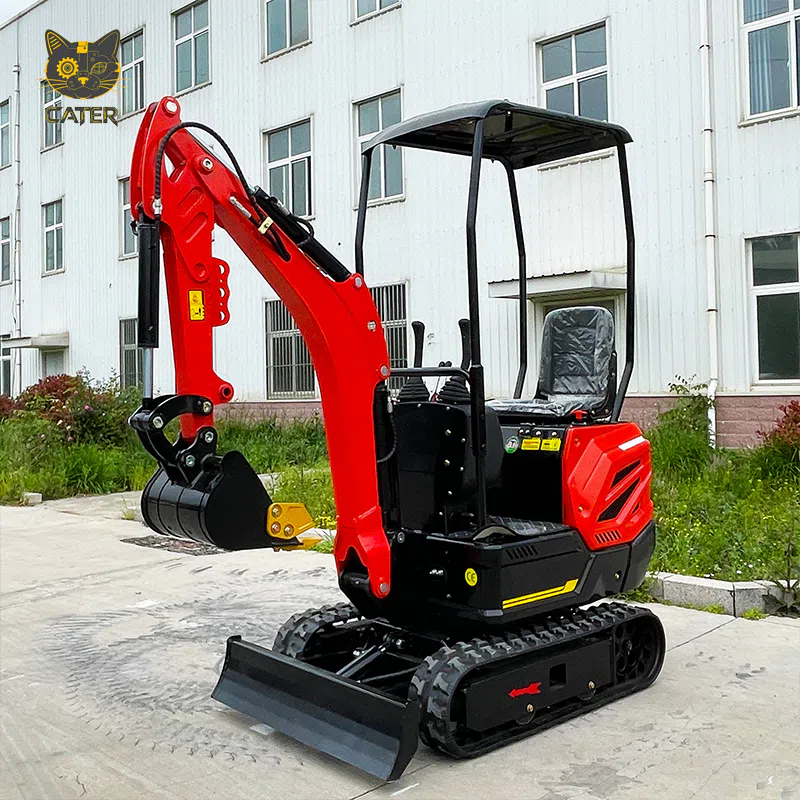
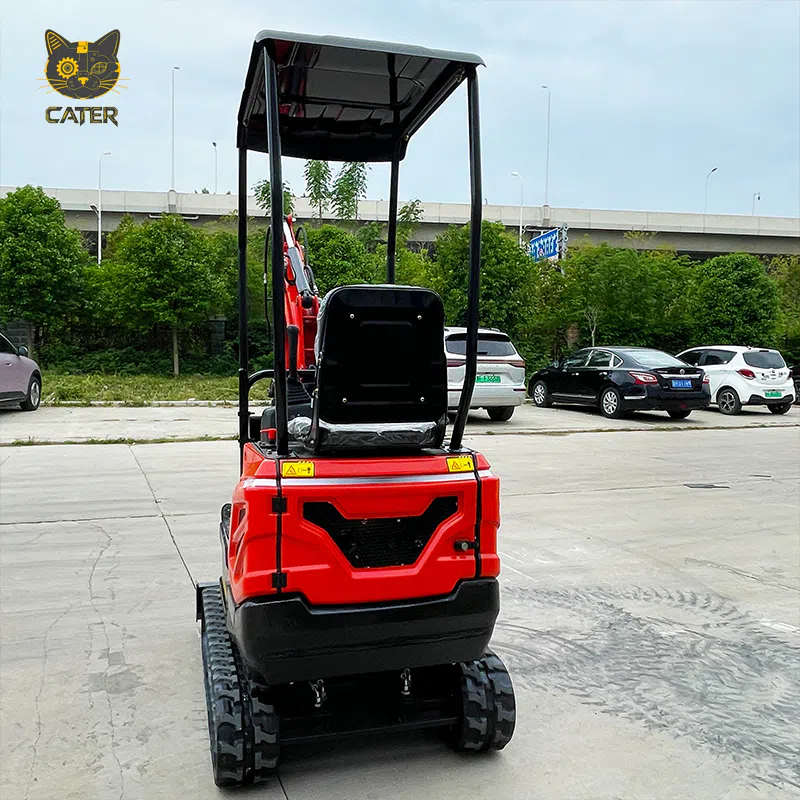
Specifications help you screen a machine against the brief. They do not replace site judgement. On the CATER 1.3-ton rubber-track mini excavator, the product page lists a maximum digging depth of 1700 mm, a maximum digging radius of 3000 mm and a standard bucket width of 400 mm with a capacity of 0.025 m³. Used correctly, those listed values let you ask the right questions: is the designed trench depth within the machine's listed reach, does the run need machinery to service a trench from one side only, and is the standard bucket width a sensible starting point for the pipe bedding detail? Note that these are separate listed maximums, not a guarantee that the listed radius is available at the listed depth at the same time; the working range diagram supplied with the machine, or confirmed by the supplier, is what shows how depth and reach vary together.
Used incorrectly, the same numbers become dangerous shorthand. A listed digging depth is a geometry figure at a defined point on the working range diagram — it is not a statement that every soakaway, every connection and every trench of that depth can be opened safely, and it is certainly not a soil-support plan. A listed maximum radius should not be read as the reach available for placing spoil across the whole envelope while digging at full depth; where material can be placed depends on the machine's position and on the working range diagram, not on a single maximum. A bucket capacity of 0.025 m³ describes the volume of the bucket, not the tonnes a machine will move per hour, and it says nothing about output on a given site. Treat the listed figures as reference points for planning, and confirm the configuration, attachments, weights and suitability for your specific work against your quotation before the machine is committed.
Underground Services: Plan, Locate, Confirm
Buried services introduce hazards that must be addressed in the utility-trenching plan. The UK Health and Safety Executive sets out a clear sequence in its guidance on excavation and underground services: plan the work and consult the available plans, locate and identify the services, then excavate safely. The same page warns that service plans are only an indication of what is buried, and that only a competent person should locate, identify and mark services in the ground. That distinction — between a drawing and a verified position — is the whole point of the sequence. A mini excavator does not become safer because it is small, and no operator or machine removes the need to locate and confirm.
Locating, identifying and marking
Where services are expected, a trained locator should be used, and the locating equipment should be regularly checked and then used repeatedly during the work as the excavation advances, not once at the start. Marking the ground is a working record, not a formality. The HSE guidance is explicit that plans alone indicate what may be present and that identification and marking are the job of a competent person; the same practice sequence is summarised in HSG47, the HSE's guidance on avoiding danger from underground services. Read that sequence as a planning framework to be adapted to your own site and local rules, not as a set of universal thresholds; this is UK guidance, and outside the UK the equivalent local regulations and a competent plan define what applies.
Never build the dig around an unverified line
The practical rule for the brief is simple: the excavation envelope is drawn around confirmed positions, and it changes when a service is confirmed. If a service cannot be confirmed, the run, the method and the supervision need to be reconsidered before work starts, not adjusted in the seat. There is no bucket width, no engine rating and no depth figure that substitutes for locating, marking and confirming. Material about operating close to a cable, or about excavating to any given depth without support or a person in control of the excavation, is exactly the kind of instruction this article will not give — those are site-specific decisions for the competent people responsible for the ground.
Ground, Structures, Water and Trees at the Edge
The excavation envelope is also bounded by what is beside it. The HSE's construction safety topic on excavations groups the things that must be planned before breaking ground: the ground itself, underground structures, watercourses and services. It notes that the support required for the excavation, together with any necessary design or measures, should be in place before work starts, and that no ground can be assumed to stand unsupported, so the assessment belongs to the specific excavation rather than to a blanket rule. It also flags that plant and vehicles running close to the edge add extra load that can cause a collapse, that nearby garden walls on shallow foundations are vulnerable even at small trench depths, and that root damage near a trench can affect existing trees.
Two consequences follow for a small machine. First, access and spoil placement belong in the envelope plan, because where the excavator and the delivery vehicle stand changes the load on the trench edge. Second, a compact excavator is not automatically gentle on its surroundings; rubber tracks may reduce surface marking, but the ground, the wall and the tree still need to be assessed on their own merits. Inspection is a separate control from maintenance: a competent inspection at the start of the shift and after events that could have affected the excavation is not the same activity as servicing the machine. Engine fumes are another planning point — an open canopy does not prevent exhaust from accumulating in nearby excavations or enclosed areas, so exhaust still needs to be considered in relation to the working position, as HSE guidance notes.
Care, Pre-Start Checks and Handover
Routine care matters on drainage work, so the envelope plan can usefully reach into pre-start checks and maintenance questions. An older supplier article on boosting compact excavator uptime (Bobcat New Zealand, 2019) makes a point worth repeating: read the correct operation and maintenance manual for the controls and the service schedules, because settings or schedules carried over from another machine may not match this one. That 2019 article is generic supplier guidance, not CATER's service schedule for the delivered machine. The same article advises inspecting the tracks for cuts, tears and exposed steel, noting that a loose track can de-track a machine and that tension values and machine position come from the manual. It also notes that filter service intervals differ between machines and that unnecessary filter removal risks contamination, and that attachment edges, pins and hoses should be checked. Manufacturer-recommended fluids and intervals are the ones to follow, and warning decals should be heeded.
For a drainage or utility contract these become practical questions for the supplier rather than a warning list: which manual applies to the delivered unit, what the service schedule and fluid requirements are, how the rubber tracks should be inspected, and what the recommended checks are before the machine goes to site. Ask those questions before handover, record the answers, and build a short pre-start routine around them so that the same checks happen on every shift.
Frequently Asked Questions
Can a 1.3-ton mini excavator dig every drainage run on the drawing?
No. The machine's listed digging depth and radius are reference geometry, and whether a specific run is suitable depends on the design depth, the access, the ground, and the services in the way. Some runs will call for a different method or a larger machine. Confirm each run against the brief rather than the drawing alone.
Does a larger digging depth figure mean the machine is safe to trench near services?
No. A depth figure describes reach, not safety. Trenches near services are governed by planning, locating, identifying and marking, and by safe excavation practice, exactly as set out in HSE guidance. No specification changes the need to confirm what is buried before the ground is opened.
Can I use the listed reach to decide where to place spoil?
Only as a starting point. The reach tells you where the machine can physically place material, but spoil position is really an excavation-envelope decision: it must not overload the trench edge, block access, or interfere with services, people or stored pipe. Decide it from the brief and the site, then confirm it with the machine in position.
What should I confirm with the supplier before delivery?
Ask which operation and maintenance manual applies, what the service schedule, filter requirements and recommended fluids are, how the rubber tracks should be inspected, and how the delivered unit is configured for your attachments and work. Confirm all specifications, weights and suitability against your quotation rather than relying on any single figure from a web page.
Plan the Envelope, Then Bring in the Machine
If you are putting together a drainage or utility package and want to confirm configuration, attachments and delivery details for the 1.3-ton rubber-track mini excavator, contact us at info@caterequipment.com.cn with your drawing, access constraints and target programme. A short, honest brief at the start is more useful than a redesign after breaking ground. Confirm all specifications, weights and suitability against your quotation, and keep locating, marking and safe excavation decisions with the competent people responsible for the ground.