Every month we get the same question from contractors and first-time importers: which mini excavator should I buy? It sounds simple, but the answer is rarely about the machine alone. It is about the jobs you will feed it, the ground it will work on, the regulations you ship under, and the company standing behind the warranty. Get those four things right and even a modest 1.5 ton machine pays for itself within two or three rental contracts. Get them wrong, and you are left with a machine that sits in the yard because it cannot reach the digging depth your projects demand, or because the "factory" you bought from turns out to be a trading office with no parts stock.
The market is growing fast enough that buyers can afford to be careful. The compact excavator segment was worth roughly USD 10.8 billion in 2025 and is projected to reach USD 15.7 billion by 2035, according to Fact. MR's Compact Excavator Market analysis — a steady 3.8% CAGR that reflects how much of the world's work has moved to tight urban sites, residential plots, and utility corridors where full-size machines simply do not fit. More machines entering the market means more choice, and more choice means you need a clearer selection method, not a bigger brochure pile.
This guide walks through that method step by step: how to match size to application, which specification numbers actually decide whether a machine earns its keep, how to tell a genuine mini excavator manufacturer from a middleman, and the mistakes importers repeat most often. It is written from the factory floor of a Chinese manufacturer that has shipped compact excavators to dozens of countries, so the advice leans practical rather than theoretical.
Step 1 — Match the Machine Size to the Work You Actually Do
Mini excavators are usually sold by operating weight, and the weight class you need is dictated by the deepest, heaviest task in your pipeline — not the average one. Contractors who buy one size up "just in case" pay for extra steel they rarely use; contractors who buy one size down end up renting a bigger machine on the days that matter. Here is how the common classes line up against real applications.
1 Ton to 1.3 Ton — Access Machines for Narrow and Light Work
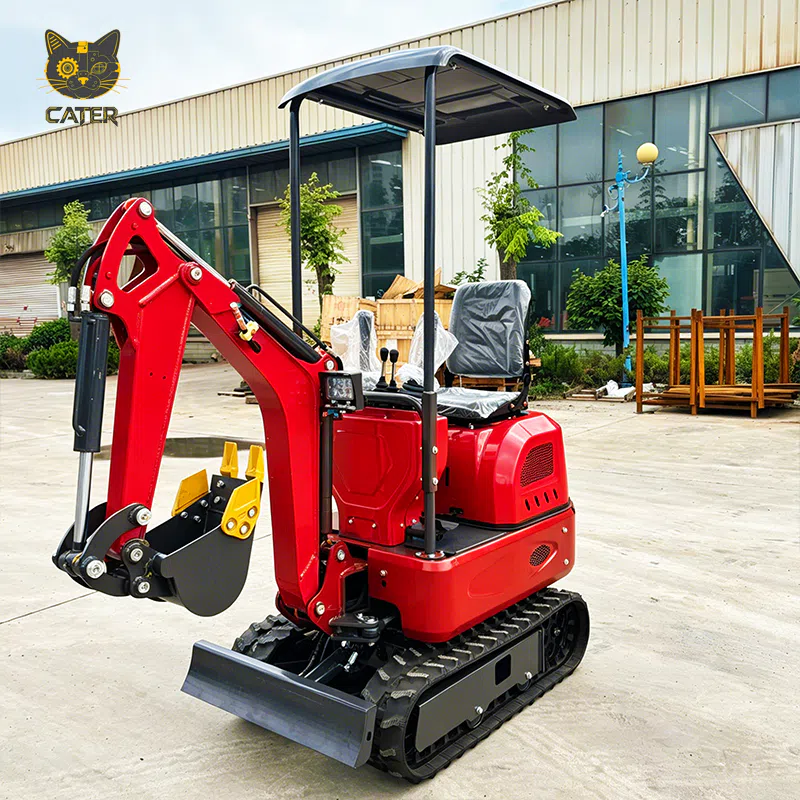
Machines around 1 ton are built for one thing above all: fitting where nothing else will. At roughly 950 mm wide, a 1.3 ton mini excavator walks through standard garden gates and works between building walls where a full-size machine cannot turn around. Typical jobs include landscaping, fence post setting, small trenching for irrigation, greenhouse and nursery work, and light demolition inside existing structures.
The trade-off is depth. A machine in this class typically digs to around 1.7 m with a short tail swing radius, which suits shallow utility runs but will frustrate you on deep foundation work. If most of your contracts are residential landscaping or indoor renovation, this is the honest size for you. A 1 ton lightweight model is also the easiest to transport — many contractors move them on a standard pickup trailer, which is a genuine operating-cost advantage.
1.5 Ton to 1.6 Ton — The Working Contractor's Sweet Spot
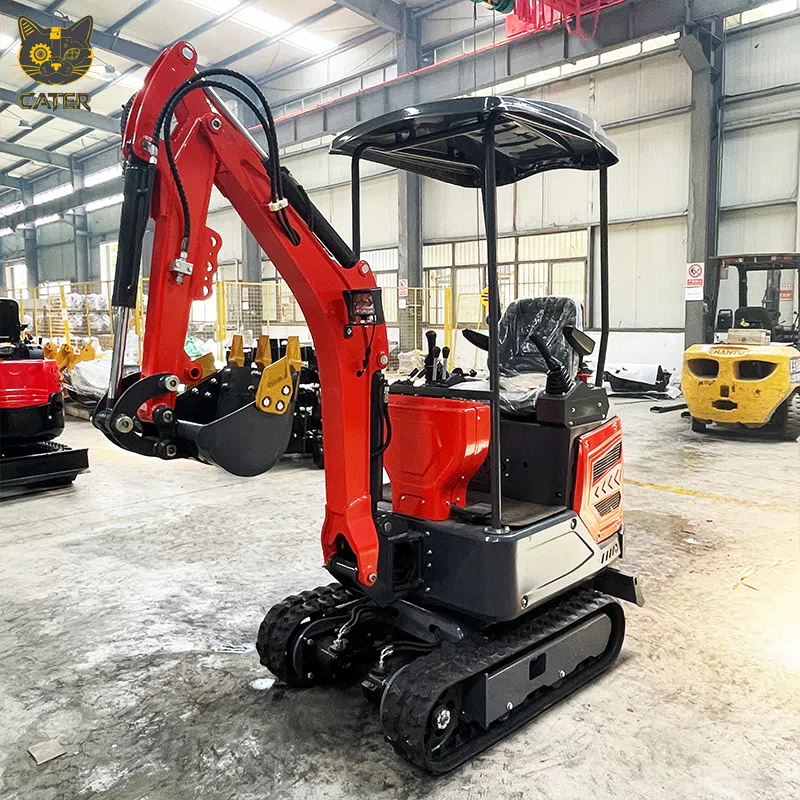
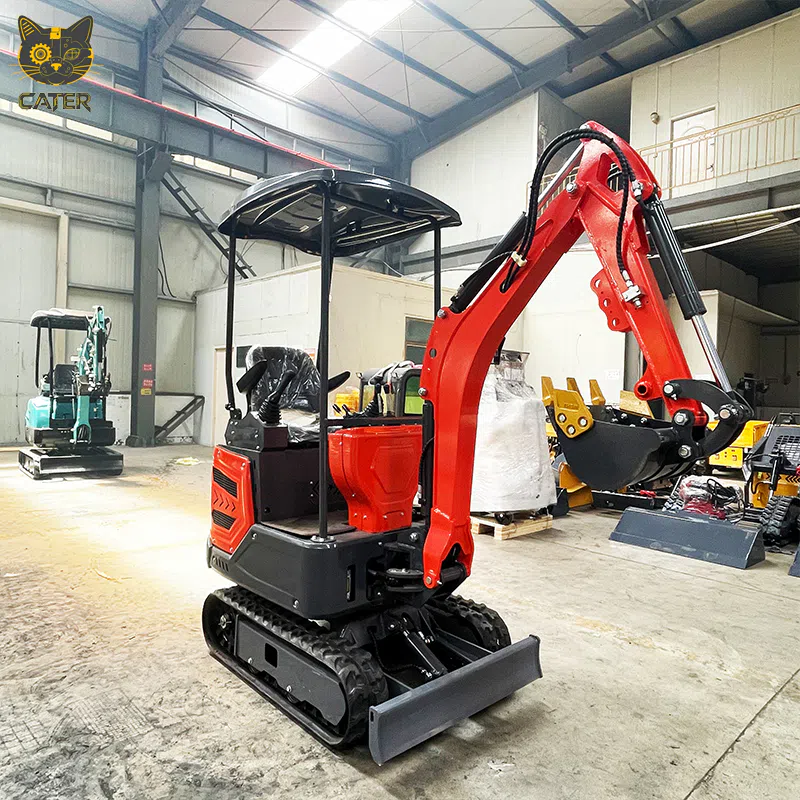
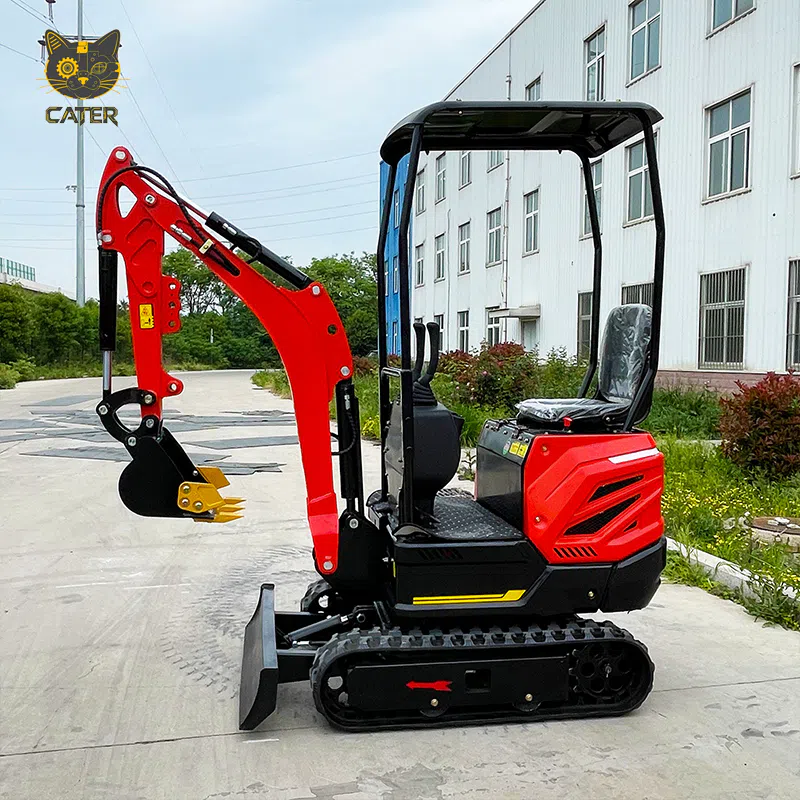
The 1.5 ton class is where most professional landscapers, utility crews, and small builders land, and it is easy to see why. A 1.5 ton mini excavator keeps the narrow footprint — around 950 mm to 1,100 mm wide — but adds noticeably more digging force and a deeper reach, so it handles drainage installation, cable and pipe trenching, curb work, and general site prep without breaking a sweat. It is still light enough for a small truck and trailer, which keeps mobilization cost low on jobs that change location every few days.
For buyers building a small fleet, the 1.5–1.6 ton range also offers the best balance between price and daily productivity. This is the class we recommend most often to first-time importers, and the reason is simple: it does 80% of the jobs a 3 ton machine does on residential and light commercial sites, at a fraction of the purchase price and hauling cost.
1.8 Ton to 2 Ton — More Depth, More Confidence
When your contracts move beyond landscaping into serious utility work, drainage projects with deeper invert levels, or small commercial foundations, step up to the 1.8–2 ton class. The extra operating weight translates directly into digging depth and bucket breakout force, and the heavier chassis stays stable when you are prying out roots or working on slopes. Machines in this range are still compact enough for urban sites, but they behave more like a "real" excavator — which matters if your operators are used to full-size machines.
A practical note: if more than half your revenue comes from jobs requiring over 2 m of digging depth, consider whether a 2.5–3 ton machine is the better long-term buy. Mini excavators are brilliant tools, but they are not a substitute for a mid-size machine on sustained deep excavation.
Step 2 — Read the Specs That Decide Whether a Machine Earns Its Keep
Manufacturers publish long specification tables, and most of them are genuinely useful — once you know which numbers matter for your use case. Here is the short list we use when qualifying a machine for an export customer.
Operating weight.
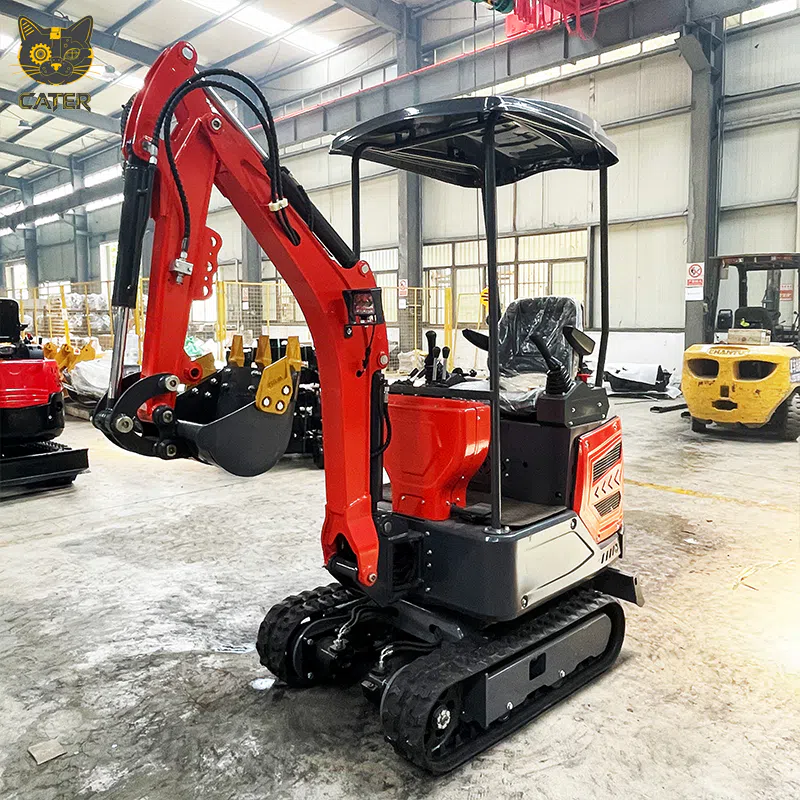
This is the class definition, but check the actual figure, not the rounded sales name. A "1.5 ton" machine that ships at 1,480 kg and one that ships at 1,600 kg will feel different on the same job — heavier means more stability and more digging force, at the cost of more transport weight and ground pressure. Match it to your trailer capacity and to the surfaces you work on.
Digging depth and dumping height.
Depth decides whether the machine can finish your deepest recurring task; dumping height decides whether it can load into the dumpers and trucks you actually use. Write down your two most common tasks, note the depth each requires, and buy against those numbers — not against the biggest number in the brochure.
Arm and bucket force.
Two machines with identical weight can dig very differently because of hydraulic pressure and arm geometry. If your work involves hard clay, compacted gravel, or roots, ask the manufacturer for the bucket breakout force and compare it within the same weight class. This is where cheap machines reveal themselves: they save money on the hydraulic system, and you feel it on every tough dig.
Rubber tracks vs. steel tracks.
Rubber-tracked mini excavators protect finished surfaces, run quieter on pavement, and are the default for landscaping and municipal work. Steel tracks last longer on rocky and demolition sites and provide better grip in mud. Many buyers choose rubber tracks for a general-purpose machine and switch to steel only when the work profile is consistently abrasive. Ask whether your supplier offers both.
Zero tail swing or short tail swing.
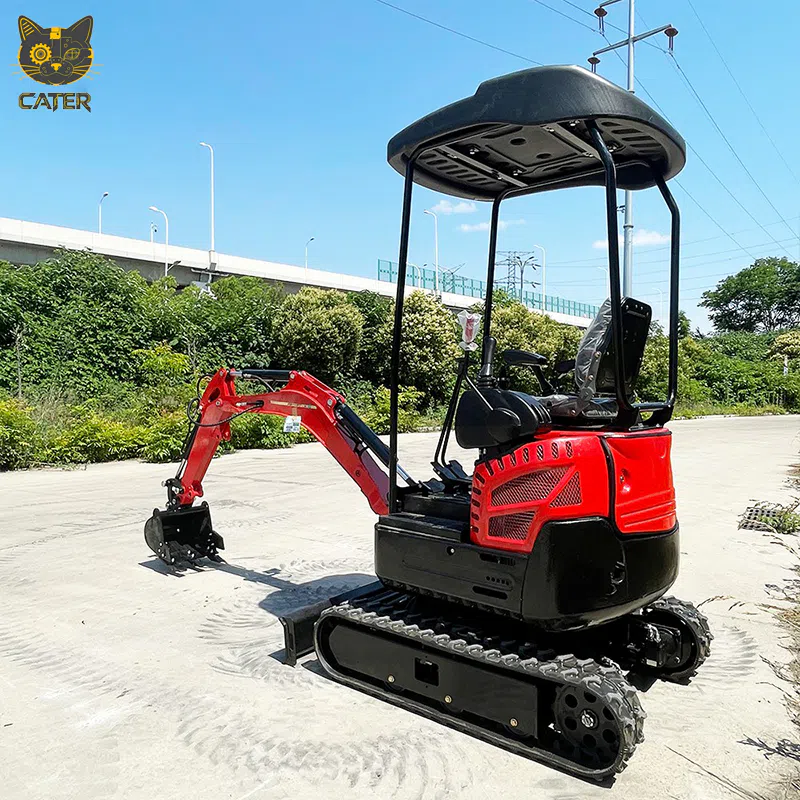
On confined urban sites and when working next to walls, a zero tail swing mini excavator lets the counterweight stay inside the track footprint while the cab rotates — meaning you can dig parallel to a building line without the rear swinging into traffic or scaffolding. If your typical site is a residential backyard or a tight street, this feature is worth paying for.
Auxiliary hydraulics.
A mini excavator with a plumbed auxiliary circuit can run hydraulic breakers, augers, and compactors, turning one chassis into several tools. If you expect rental income from attachments, confirm the flow rate and pressure match the attachments available in your market.
The engine.
Look for established, serviceable diesel engines from recognized makers. Parts availability in your country matters more than the brand name on the plate — ask the supplier which engine they fit, whether spares are stocked for export, and how long a replacement engine or injector set takes to reach you.
Step 3 — Verify the Supplier, Not Just the Machine
The single biggest risk when buying a mini excavator from China is not the machine — it is the seller. The country has world-class mini excavator manufacturers, and it also has trading companies that rebrand machines from several anonymous workshops and disappear when a warranty claim arrives. The difference is not always visible in price, so you have to look for it.
Factory or trading company?
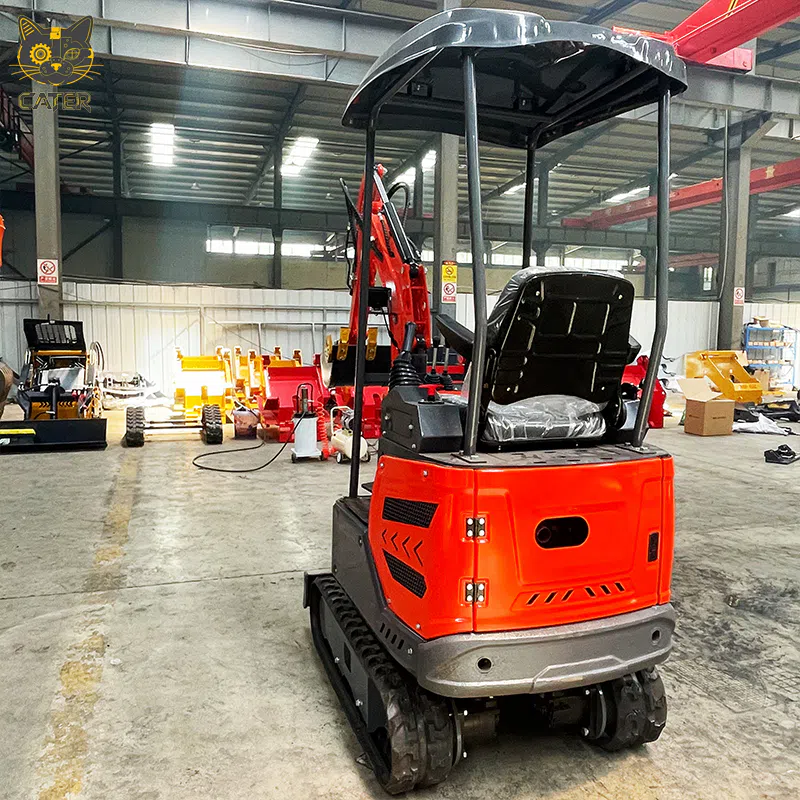
Ask directly, then verify. A genuine mini excavator factory can show you its production line, its own quality-control records, and its own export documentation. Trading companies can show you someone else's. Video calls to the workshop, requests for photos of the specific unit being built for you, and checks of the business registration all cost nothing and filter out a large share of middlemen.
Certifications and market compliance.
Mini excavators exported to different regions carry different requirements — CE marking for European markets, EPA or CARB considerations for the United States, and various local noise and emission rules elsewhere. A reliable mini excavator supplier will tell you honestly which certifications its machines carry and which documents it can provide, rather than promising "all certificates" on request. Ask for the engine emission standard and the machine's documentation list in writing before you pay a deposit.
Quality control process.
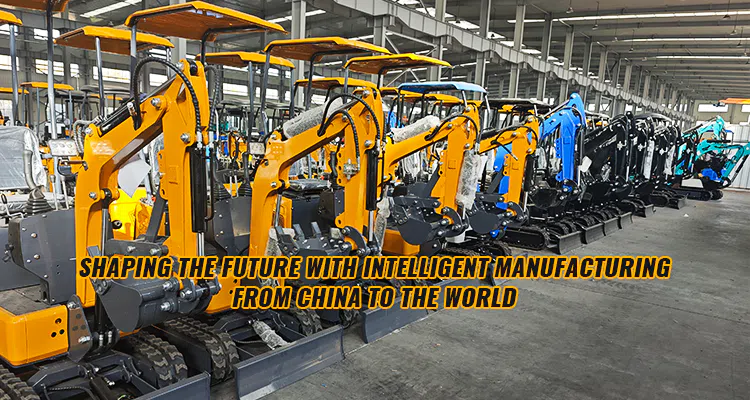
Ask what inspection points exist between assembly and crating: hydraulic pressure testing, track tension adjustment, leak checks, and a running test before disassembly for shipping. Some manufacturers, including CATER, run a full commissioning test on every unit and record the results. A supplier that cannot describe its QC process in concrete terms is asking you to be its quality department.
Parts and after-sales support.
This is the question that separates one-time sellers from long-term partners. Confirm the supplier stocks wearing parts — filters, seals, hoses, track components — and can ship them by air when a machine is down. Ask about warranty terms in writing, including what is covered, who covers freight on replacements, and how claims are processed. For a machine that will work daily, a parts commitment is worth more than a small discount.
References and track record.
Ask for export destinations and, where possible, contact references. A mini excavator manufacturer that has shipped to your region before understands your documentation requirements and your buyers' expectations; a first-time exporter to your market will learn on your order.
Step 4 — Avoid the Mistakes Importers Repeat Most Often
Over years of export business we see the same four errors, and they are expensive ones.
Buying on price per ton alone.
The cheapest machine per kilogram is usually the cheapest hydraulic system, the weakest boom steel, or the thinnest paint. Compare machines feature by feature within a weight class, and treat a significantly lower price as a question to investigate, not a bargain to celebrate.
Ignoring transport and customs until the invoice arrives.
A mini excavator is a sizeable, heavy export shipment. Factor in the crating dimensions, the container plan, freight, destination port charges, and local import duties before you compare quotes — the landed cost is the only honest price. A supplier that offers guidance on container loading and shipping documentation is saving you real money and delay.
Choosing a size for the brochure, not the site.
Buyers often oversize because a bigger machine "looks like better value." The machine that earns is the one that fits your access constraints, your trailer, and your typical depth — not the one with the largest number in the ad.
Skipping the after-sales conversation.
The machine is delivered in weeks; the relationship lasts for years. Ask the hard questions about parts, warranty, and technical support before you sign, and get the answers in writing. A supplier who hesitates on these questions during the sale will be unreachable after it.
Frequently Asked Questions
Q1: Are Chinese mini excavators reliable?
A well-built mini excavator from a genuine Chinese manufacturer is reliable in daily service, which is why Chinese compact machines now power a large share of rental fleets and contractor operations worldwide. Reliability depends less on the country of origin than on the factory's QC process and component choices — branded engines, tested hydraulics, and documented commissioning. The practical safeguards are the same as for any equipment purchase: verify the factory, check the QC process, and confirm parts support before payment.
Q2: How much does a 1.5 ton mini excavator cost?
Pricing for a 1.5 ton mini excavator varies widely with configuration — engine brand, rubber or steel tracks, canopy or cab, attachment package, and shipping distance. As a rule of thumb, factory-direct pricing from China runs well below equivalent Japanese or American machines, which is precisely why importers should compare landed cost (machine + freight + duties + spares) rather than the ex-works figure alone. Request a full quotation from the manufacturer with the configuration you need; any supplier that answers quickly with a vague range is not quoting your machine.
Q3: What is the delivery time for an overseas order?
A standard mini excavator order from a manufacturer with production capacity typically ships within a few weeks of deposit, plus ocean freight time to your port — roughly 4 to 8 weeks for many destinations. Confirm the lead time in writing, and ask whether the supplier builds to order or ships from a finished-goods stock; stock machines shorten the wait considerably.
Q4: What if a part fails after delivery?
A committed supplier keeps wearing parts in stock and ships replacements promptly, and should also provide technical documentation and responsive support for your mechanics. Confirm before ordering which parts are stocked, how warranty claims are processed, and whether replacement parts are sent by air freight when a machine is down. This conversation, held before purchase, is the best insurance you can buy.
Why Work with a Manufacturer That Digs for a Living
The advice above is the same checklist we apply to our own export orders. CATER is a mini excavator manufacturer and exporter based in Xuzhou, Jiangsu Province — a region that has built compact construction machinery for decades — producing compact excavators from 1 ton to 1.8 ton classes, including zero tail swing and rubber track models, alongside skid steer loaders and agricultural machinery. Every machine leaves the workshop after a full commissioning test, and our export team helps buyers through container planning, shipping documentation, and parts support after delivery.
If you are comparing mini excavator suppliers for your next fleet order, we would welcome the chance to walk you through our production line on a video call and quote the exact configuration your jobs require. Send us your application, your typical digging depth, and your destination port — we will come back with a machine recommendation and a transparent landed-cost breakdown, not a brochure.