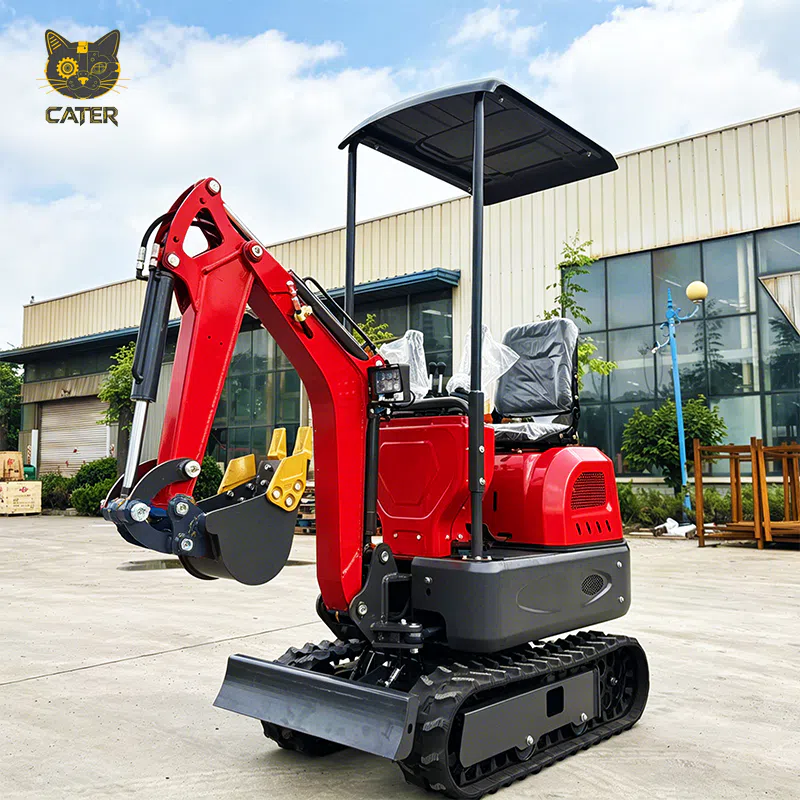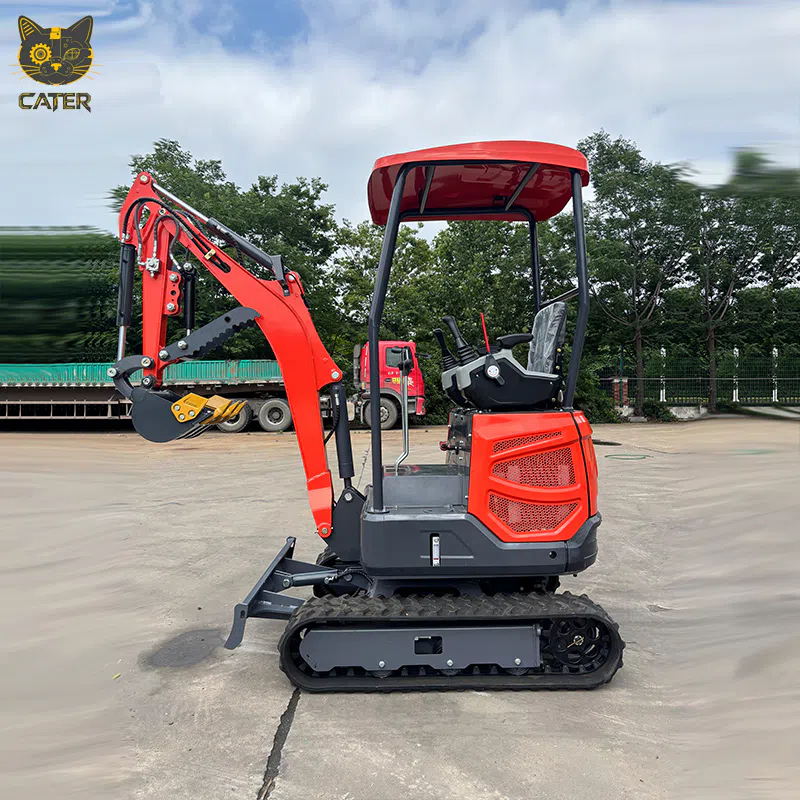

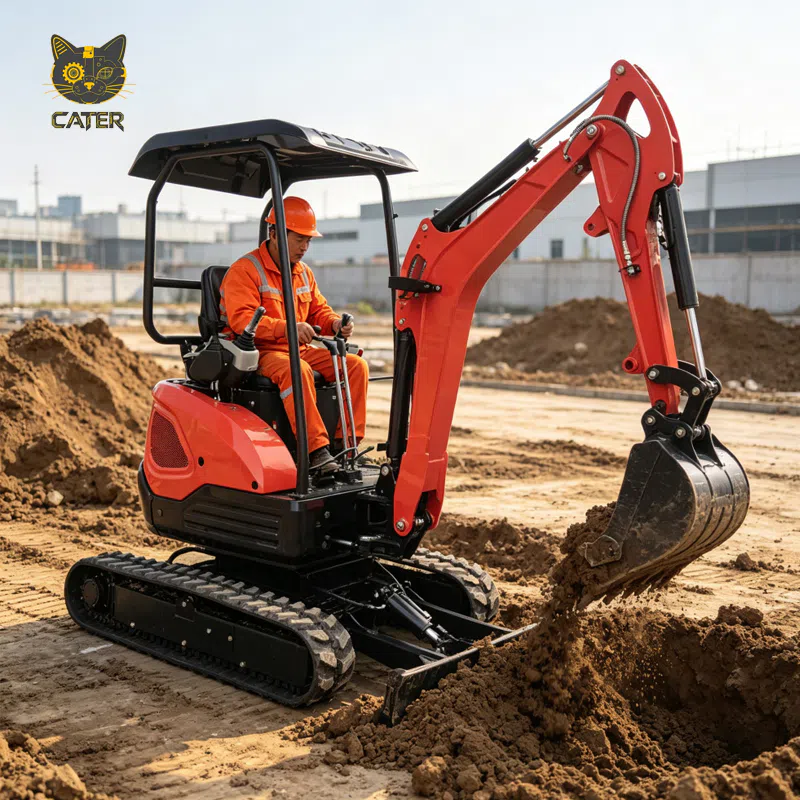
Rubber-track mini excavators are often chosen for jobs where the machine itself must not become the damage. Paving, kerbs, planting beds, established lawns and freshly finished hardstanding are all surfaces a careless pass can scar long before the bucket touches them. Two jobs matter equally: keep the finished ground intact, and keep the rubber track and its undercarriage in condition, because the state of the track and undercarriage affects how the machine behaves on finished ground.
Rubber Tracks Are Not a Surface-Protection Guarantee
Rubber tracks are widely used on finished ground such as asphalt, block paving and sub-base, but they are not a surface-protection guarantee. A rubber track may mark paving, carry and transfer material, and present a debris hazard where loose material collects or is thrown.
A rubber track still carries the full weight of the machine, and load does not disappear because the contact surface is soft. On finished paving it may leave a light scuff, a faint tread pattern or transferred material — still damage on a surface handed over clean. On soft or saturated ground the belt can rut and compact the soil, because the machine is heavy for its footprint.
Plan Travel and Turning
Turning deserves attention on finished ground, so plan travel routes and turns rather than turning wherever convenient. Practical measures include agreeing a travel route and keeping to it, using gentler multi-point turns where the site allows, and placing suitable rated surface protection only where a site assessment confirms it is appropriate; a protection product is not automatically rated for the machine in question, and a mat is not a substitute for a proper assessment of the ground. Keep the spoil stockpile back from the excavation edge, and clean material off the tracks before entering a surface you mean to protect. On a tight, finished site, planned movement and a suitable machine specification need to be considered together.
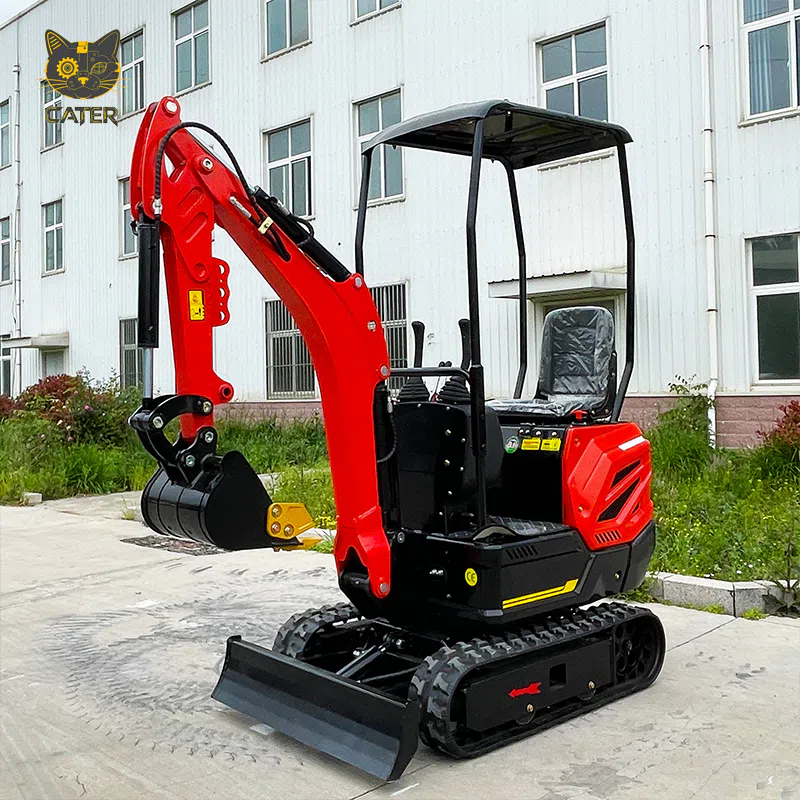
Reading the Numbers Honestly: Width, Weight and Profile
Width, weight and the space occupied during rotation each raise different questions for access and surface protection.
The first is width. The chassis width is listed as 925 mm, while the overall dimensions give an overall width of 950 mm. These are different measurements, so when checking whether the machine will pass a gate, doorway or line of posts, ask for the drawing that shows the configured width and the clearance it requires. Treating the two figures as interchangeable is how a machine that "should fit" arrives at a pinch point it does not.
The second is weight. The operating weight is listed at 1300 kg — a machine specification, stating what the unit weighs in its listed configuration. It is not a floor rating, a slab capacity, or evidence that the machine can be driven into any building or onto any raised surface. Whether a floor can accept that load depends on how it is carried: load distribution under the tracks, the span and construction of the slab, the presence of voids, basements or services below, and the structure's age and condition. Those are engineering questions for the site's competent person, supported by drawings and an assessment. Treat the figure as one input to that assessment, not the answer to it.
The third is profile. The product page does not establish this machine's zero-tail status, so do not assume that it is a zero-tail design. Before working close to walls, glazing, railings or stacked material, obtain the machine's rear-slew envelope and plan the working position around it. Keep people and finished surfaces clear of the rear arc for the envelope that applies to the delivered unit. Compact does not automatically mean zero-tail; confirm the rear-slew envelope for the actual unit.
Working Near Tree Roots, Walls and Excavation Edges
The places where a mini excavator can cause lasting harm are often the ones nobody thinks about until afterwards: the root plate of a mature tree, a boundary wall, and the lip of the excavation itself.
Plants and vehicles positioned close to an excavation edge add load to the ground and can contribute to collapse, and nearby garden walls on shallow foundations can be vulnerable even when the trench itself is small. It also notes that root damage can affect a tree's health, and that the ground should be planned around existing structures, watercourses and services rather than assumed to be uniformly reliable. In practice: keep the machine and any spoil back from the edge by a margin a competent person can justify; have any root protection zone defined by a suitable specialist assessment rather than a fixed rule of thumb; and where a wall stands close, treat it as potentially vulnerable and let a competent assessment set the working limits. A mini excavator is lighter than a full-size machine, but the working limits beside an excavation, a wall or a tree still belong to a competent person's assessment, not to the size of the machine.
Buried services add a second layer. HSE guidance on excavation and underground services sets out the following sequence: plan the work and consult the available plans; treat those plans as an indication only, so that a competent person can locate, identify and mark the services; use a trained locator whose equipment is regularly checked, and use it repeatedly as work proceeds; and confirm positions by safe excavation, including trial holes and suitable hand tools where needed. The same three elements — planning, locating and identifying, and safe excavation — form the core of the recognised HSE underground-services guidance. These are UK publications, not a law applying in every country, so pair them with your local rules and a competent plan. The point that travels everywhere is the second one: a drawing shows where a service is believed to be, and belief is not identification. Nothing about a compact rubber-track machine makes striking a cable or a gas main less serious.
Protecting the Undercarriage: Inspection and Care
The other half of surface protection is protecting the machine's own running gear, because a damaged track is both a safety matter and a likely source of further surface damage.
A long-standing supplier article on compact excavator uptime offers practices that remain sensible. Four points are directly usable. Read the correct operation and maintenance manual and follow it for controls and service schedules, rather than assuming that habits learned on another machine transfer. Inspect the tracks for cuts, tears and exposed steel, and remember that a loose track can de-track. Service filters at the intervals the manual sets, avoiding unnecessary removal of filtration components, since handling is itself a route for contamination. Inspect attachment edges, pins and hoses during the same walk-round, use the fluids and intervals the manufacturer recommends, and take the published warnings seriously
A Short Client Brief and Handover Checklist
Before the machine is mobilised, agree the following with the site's competent person and record it in writing.
• Access: ask for the drawing that gives the configured width and the clearance it requires; the page lists a 925 mm chassis width and a 950 mm overall width as different measurements.
• Surfaces: list which surfaces must be protected, and agree the travel route, turning points and any rated surface protection confirmed by a site assessment.
• Ground and structures: confirm who has assessed slab bearing, edge offsets and root protection areas.
• Services: confirm that plans have been obtained and that locating, identifying and marking will be arranged by a competent person before ground is broken.
• Machine: confirm that the operator manual travels with the unit, that the controls have been briefed, and that the undercarriage has been inspected.
• Handover: photograph and record track condition, check tension as the manual instructs, and confirm the service intervals that apply to this unit.
This is a planning brief rather than a formal delivery inspection, and it does not replace the checks that apply to a delivered machine.
Frequently Asked Questions
Do rubber tracks leave no marks at all on finished surfaces?
No. A rubber track may still scuff paving, transfer material and leave debris on finished ground, so plan surface protection rather than relying on the track material alone.
If the machine weighs 1300 kg, can it be driven onto any floor?
No. Weight is a machine specification, not a floor rating. Whether a floor can accept the load depends on its construction, its span and what lies below, and that is an assessment for the site's competent person.
Is this a zero-tail mini excavator?
The product page does not establish the zero-tail status of this machine, so do not assume that it is zero-tail. Obtain the rear-slew envelope and keep people and finished surfaces clear of the rear arc for the delivered unit.
Can I set track tension using a figure I found online?
No. Tension values and the checking position are model-specific. Take both from the manual supplied with the delivered unit, and treat any published figure from elsewhere as a prompt to check the manual, not as the setting.
Plan the Site Before You Choose the Machine
Surface protection on a rubber-track job is mostly decided before the first bucket of soil moves. Confirm access against the drawing's configured width, have the ground and any structures assessed, mark out services and root protection areas with a competent person, agree a travel route and rated surface protection, and brief the operator on the site and the machine's manual. The CATER rubber-track mini excavator is one compact option where the access and surface conditions you have confirmed call for a rubber-track machine. Send your site details, the surfaces you need to protect, and any access constraints to info@caterequipment.com.cn and we will help you plan around them.