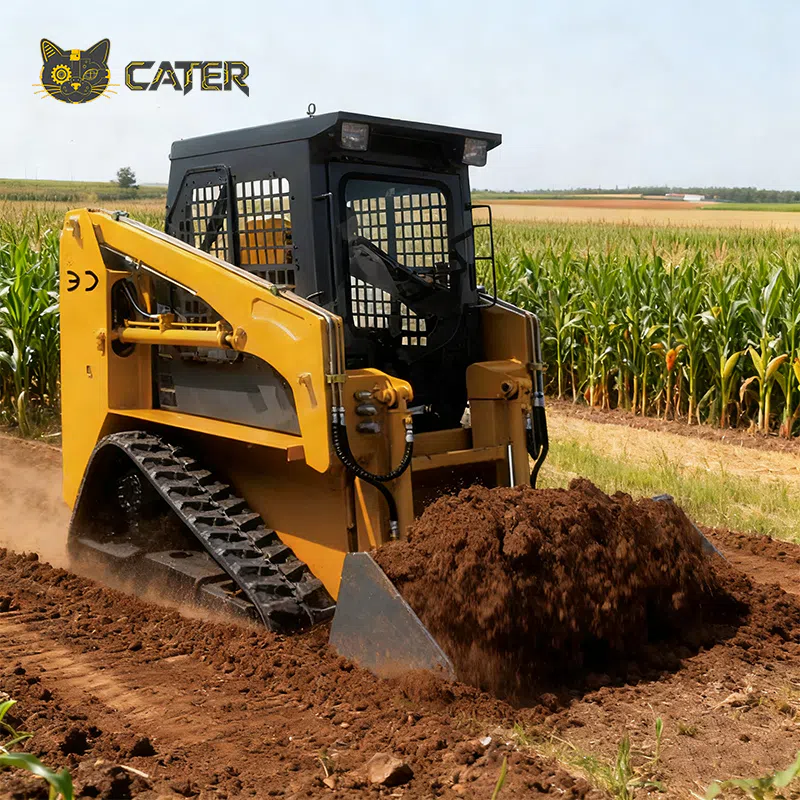
When a compact track loader is assigned to move loose material into a truck or trailer, the equipment must work together at a defined loading point. That meeting point is the loading interface. The truck body, bucket movement, ground and approach route all influence the choice. Describing the interface gives buyers specific questions to put alongside a specification table, instead of assuming that a machine's headline power rating answers the whole loading requirement.
Start with the Task, Not the Specification Sheet
What the buyer is really choosing
A buyer who wants a compact track loader for truck loading is not choosing an engine. They are choosing a repeatable cycle: an approach path, a stockpile, a truck standing position and a target. The figure that is quoted first, engine power, describes how much work the machine can be asked to deliver over time. It does not describe how high the bucket reaches, how far it places material, or what load the machine is rated to carry. The CA130 page lists a diesel power type and 70 kW. That is a power output. It is not a bucket capacity, and it cannot be converted into a safe working load or a hydraulic attachment rating.
The practical starting list is therefore about people and space rather than numbers: who drives the truck, where the truck can stand, how the material is presented and what clearance exists between the machine and the truck body. Once those have been written down, it makes sense to compare specification figures. A loader that is bought for a stockpile on one site may be asked to work in a much tighter yard on the next, and the interface, not the engine, is what changes between the two.
Confirm the geometry before you promise a truck
Truck loading is a reach-and-place task, so the geometry envelope matters. Before a buyer commits to a machine-truck combination, the truck body height and the loader's published reach figures should be placed side by side and the assumptions written down. If the service team is told "this loader loads our trucks" without the truck height and the bucket configuration being recorded, the promise is untested. The aim is not to over-engineer the decision; it is to separate the figures that are design references from the figures that have been confirmed for the actual site.
Read the Published Geometry Correctly
What the three figures describe
The CA130 page publishes a maximum dump height of 2400 mm, a maximum operating height of 4050 mm and a maximum dump distance of 700 mm. These are useful orientation figures, but each depends on how the machine is set up at the moment of measurement: the bucket angle, the configuration fitted and the reference plane used to take the reading. The maximum operating height is a separately labelled value; the page does not identify it as hinge-pin height. Do not substitute it for dump height or assume the listed maximum values apply at one simultaneous position. The page does not state a bucket capacity, a rated operating capacity or a tipping load, and those gaps matter when a truck side height is compared with a dump height. A dump height figure should be checked against the intended bucket and the intended measuring datum before it is treated as a fixed clearance.
Keep the numbers in their place
The operating weight is listed as 3530 kg, and the same table shows a machine weight of 3530 kg. That is the weight of the machine. It is not a rated load, it is not the payload the machine can place into a truck, and it is not a transport gross weight. Treating the operating weight as a carrying capacity is one of the easiest errors to make when a specification table is read quickly. Width, length and height are not given, and neither are auxiliary hydraulic flow or pressure, so a buyer should not fill those blanks from memory of a different machine or a different brand.
For a useful comparison, put the material description alongside the configuration. Loose soil and mixed construction material should not be treated as interchangeable loads just because they occupy the same bucket. Ask for the rated capacity and attachment limits applicable to the supplied machine, and establish how the intended load will be assessed. The receiving truck has its own capacity and load-distribution requirements; a suitable loader does not remove those separate limits.
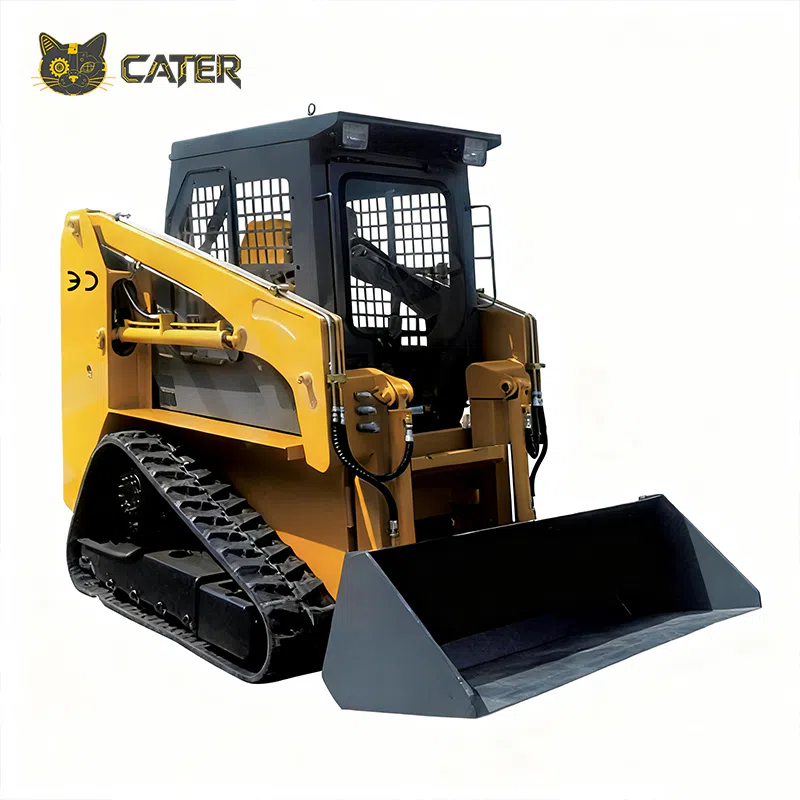
Plan the Loading Area as a Workspace
Clearing the interface
Loading is more than a lifting action; it is a small traffic system. The HSE guidance on loading and unloading describes a loading area kept clear of pedestrians and other traffic, with attention to overhead cables and firm level ground for the vehicle and the machine. The same guidance asks the operating companies to agree arrangements in advance, to give visitors clear instructions, and to prevent a vehicle from departing before loading is finished, with clearance communicated between the people involved. In a compact track loader context that becomes a simple plan: a defined approach path, a defined truck standing position, a defined pedestrian exclusion zone, and a named person who gives the go-ahead before the truck moves.
Because this is UK guidance, it is offered as a planning reference rather than a statement of law in every country. Local rules, site rules and the truck operator's own procedure still apply, and a machine that can place material over a truck side does not, by itself, make every truck a suitable target. The interface has to be confirmed truck by truck.
Separate people from the reversing cycle
Where a loading layout requires reversing, that movement needs its own planned space and controls. The HSE guidance on reversing recommends eliminating or minimising reversing by planning one-way movement where this is possible, segregating people into a planned zone, and using a trained signaller where one is appropriate, positioned safely, visible to the driver and using agreed signals. The guidance is clear that if visibility is lost the movement should stop, and that no single safety device is sufficient on its own. For a loader working around trucks, that makes the sightlines in the bay part of the specification conversation rather than an afterthought. It does not mean this machine is fitted with a camera, radar or automatic stop, and no such feature is claimed on the product page.
Design the Route the Same Way You Design the Task
Temporary routes still need planning
Loading points are frequently reached along routes that are temporary or unprepared. The HSE guidance on workplace road layout notes that planned, variable and temporary routes share the same basic requirements: the route should be wide enough for the largest vehicle and for visitors, blind bends, overhead obstructions, edges and vulnerable areas should be avoided, and safe areas should be provided for loading. Surfaces should be suitable, firm, even and drained, and the guidance cautions that slopes are not automatically safe. Route changes should be communicated and call for more attention, competence, instruction, traffic management and supervision, with preventive checks as required.
A compact track loader runs on tracks, and that changes how it spreads its weight compared with a wheeled machine, but it does not remove the need to check the route. Tracks are not a substitute for a suitable road, a drained surface or a defined traffic plan, and this article does not claim otherwise. The practical step is to walk the route with the local plan in hand and confirm where the machine, the truck and any pedestrians will be at each stage of the cycle.
Choose the machine for the whole system
The HSE introduction to work equipment and machinery frames the wider decision: choose equipment that fits the task; check that guards are complete, sound and free from obvious defects; obtain residual-risk information; train users and supervisors; and keep a safe system that covers cleaning, blockages and repair, isolating the machine before adjustment or cleaning, and following the maintenance instructions. Guards should not be removed. For a loader chosen mainly for truck loading, "fit for the task" includes the loading interface, not just the machine's own specification. The product page states a one-year warranty and lists a test report and a shipping video as provided items. Those are unverified entries on a web page; this article does not claim to have inspected them, and a buyer should verify warranty terms and documents directly with the supplier.
A Job Brief You Can Hand to the Site Team
The loading interface as a written plan
A useful job brief for compact track loader truck loading reads more like a description of the interface than a specification sheet. It records the truck type and its body height, the material and how it is presented, the surface and the route, the pedestrian and traffic arrangements, and the geometry the machine is expected to work within. It then confirms the three published figures against the intended bucket and the intended measuring datum, and states plainly which numbers are design references and which have been verified for this site. If a truck-side height sits close to the published dump height, the brief should treat that as an open question to resolve rather than an assumed clearance.
The plan also names the people: who drives the loader, who drives the truck, who controls the bay, and who can stop the movement. It records the conditions under which loading will not start, such as an obstructed path, an unsecured truck position, or a surface that has not been checked. That is the difference between a machine capability and a working method, and it is the part of the purchase that survives the first week on site.
Frequently Asked Questions
Can a compact track loader load any truck?
No machine should be described as able to load every truck. Whether a given machine can reach a given truck depends on the bucket, the truck body height, the surface, the approach position and the measured geometry. The published figures have to be confirmed against the actual configuration, and a truck-side height that sits close to the dump height needs a proper check before loading begins.
Does the 70 kW figure tell me the payload?
No. 70 kW is a power output. It is not a bucket capacity and it is not a rated load. Any load must remain within the documented machine and attachment ratings for the configuration and conditions. Material, geometry and stability also matter; none of these limits can be established from engine power alone.
Is the operating weight the load it can carry?
No. The weight listed, 3530 kg, is the machine's operating weight. It is not a rated operating capacity and it is not a payload, and it should not be used as either.
Do tracks mean I can skip route preparation?
No. Tracks change how weight is distributed, but a temporary or unprepared route still needs a suitable, firm, even and drained surface and a planned traffic arrangement. The route should be checked for width, edges, overhead obstructions and clearance before loading starts.
If you are planning a loading interface and want to check the published CA130 figures against your own truck and site conditions, review the CA130 tracked skid steer loader product page and send your application details to our sales team at info@caterequipment.com.cn.