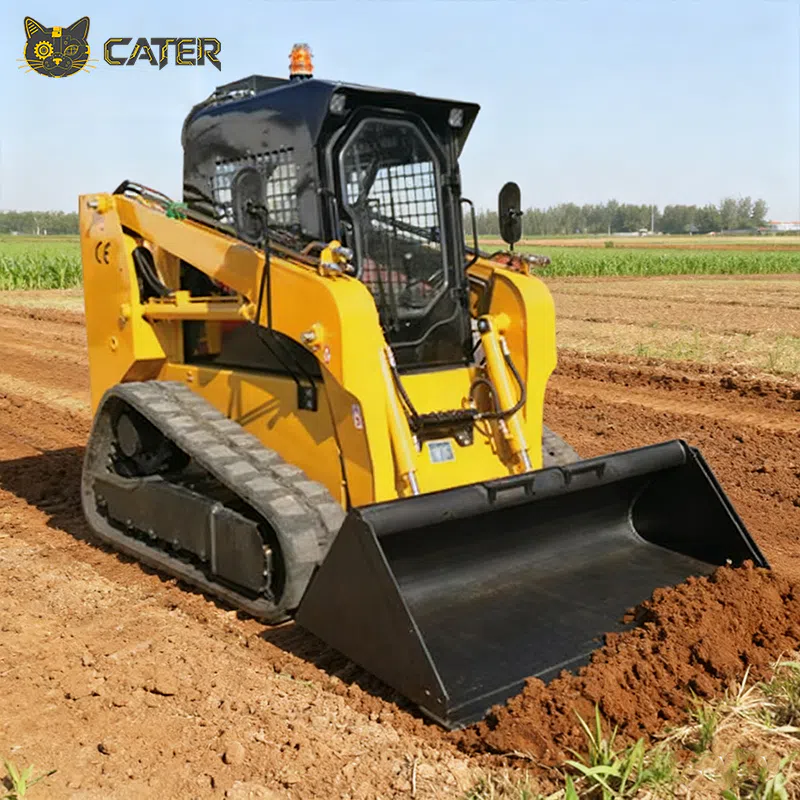

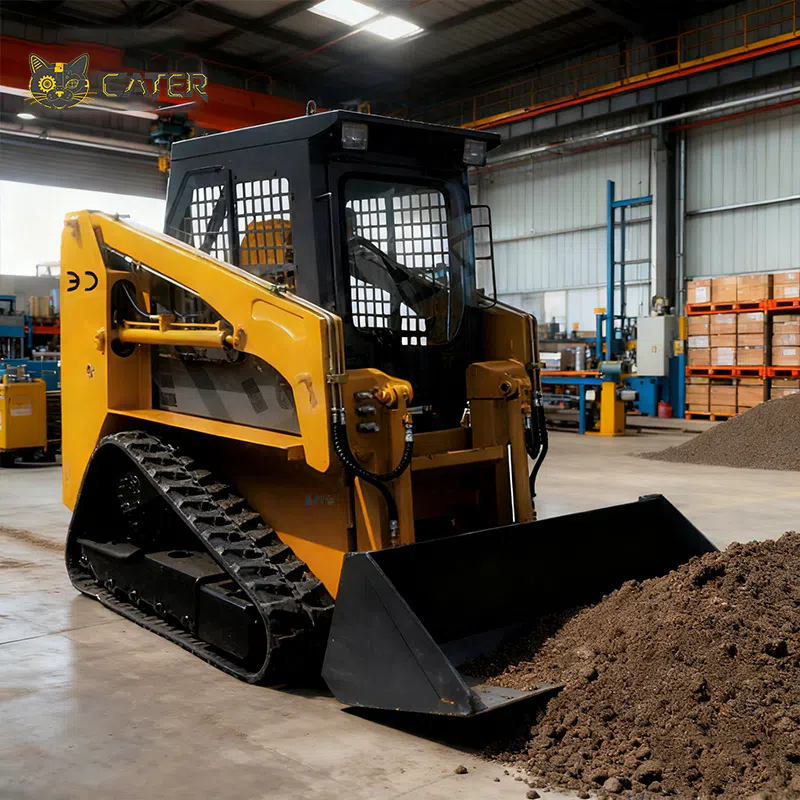
Before a construction site can receive regular deliveries, the team needs defined working areas and a usable temporary route. A tracked skid steer loader is a candidate for moving loose material and supporting ground preparation at that stage. Its suitability depends on the approved task, fitted tool, access dimensions and ground conditions—not on the word compact in its name.
The word "preparation" hides three different decisions. The first is an approved clearing and shaping package: identifying what may be removed, moving suitable loose material and forming the intended surface. The second is the temporary route: where vehicles and people move, and how that route is laid out. The third is acceptance: whether a surface is firm, even and drained enough, and whether it has the bearing and drainage that the next stage needs. Confusing these three is where site preparation tends to go wrong, because a machine that is good at the first job is not, by itself, evidence about the third.
Separate Shaping from Acceptance
What "prepared" has to mean
Ground that has been cleared and roughly shaped is not the same as ground that has been accepted for traffic or for the next construction stage. A working surface usually has to be firm, even and drained before it is trusted, and those three words describe conditions that are established by the ground itself, by drainage and by engineering judgement, not by the fact that a machine has driven across it. The loader's bucket can move, spread and level loose material, and that is a real and valuable task, but a level surface and a load-bearing surface are two different claims.
Where the earthmoving task stops
It is useful to write down where the earthmoving task ends. The proposed work package might include removing approved loose material, relocating stockpiles and spreading specified fill, where the machine and tool are suitable. Vegetation clearance or work involving buried material needs separate assessment and approval; it should not be assumed to be within the supplied bucket's role. What should not be inferred from that work is a compaction result, a bearing capacity or a drainage performance. No count of bucket passes should be read as a compaction test or as a layer thickness specification, and none is given here. If the next stage needs a verified running surface, that verification is a separate activity with its own method and its own sign-off, and it is not something the loader's presence on site can provide.
That boundary is not a limitation of one machine; it is the difference between moving material and certifying a surface. Keeping the two apart makes the site plan clearer, because it tells the team which jobs are production tasks and which jobs need a competent person's acceptance before the route can be brought into use for other vehicles.
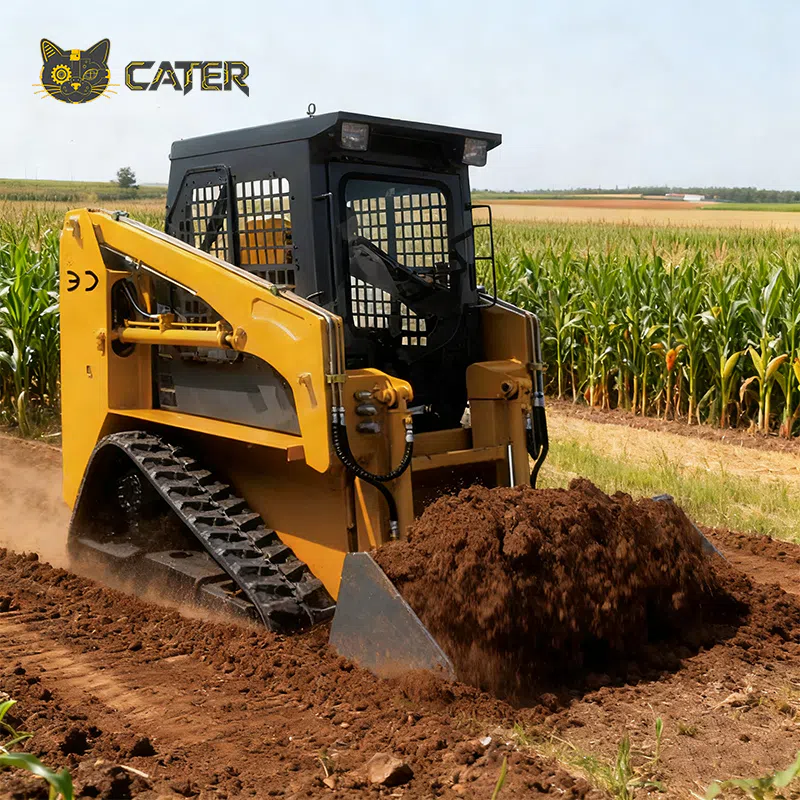
Open a Temporary Access Route
Firm, even, drained — for the largest vehicle
A temporary route is still a route. The route should be wide enough for the largest vehicle that will use it, including visitors, and it should keep blind bends, overhead obstructions, edges and vulnerable areas out of the running line wherever the layout allows. Safe areas should be provided where loading and turning take place, and surfaces should be suitable, firm, even and drained.
Slopes are not automatically safe, which is a useful warning for earthmoving work: a route that looks gentle can still be unsuitable once a loaded vehicle uses it, and the judgement is made against the vehicle, not against the loader that built the route. Local rules, the site's own traffic plan and the visitor procedures of the haulage companies still apply, and the project plan is what governs a specific site.
Communicate changes as the plan moves
Temporary routes change as the work progresses, and the same guidance notes that a route change should be communicated, and calls for more attention, competence, instruction, traffic management and supervision, with preventive checks as required. In practice this means that when the loader opens a new line or closes an old one, the change is passed to everyone who uses the route: the crew on foot, the machine operators, the delivery drivers and any visitor. A route that is obvious to the person who built it is not automatically obvious to the driver arriving the next morning.
Reversing is part of the same plan. Eliminating or minimising reversing by planning one-way movement where this is possible, segregating people into a planned zone, and using a trained signaller where one is appropriate, positioned safely and visible, with agreed signals. It adds that if visibility is lost the movement should stop, and that no single safety device is sufficient on its own. During site preparation, when the layout is still forming, one-way planning and a defined pedestrian zone are often easier to set up than they will be later, which makes the early phase a good moment to fix them.
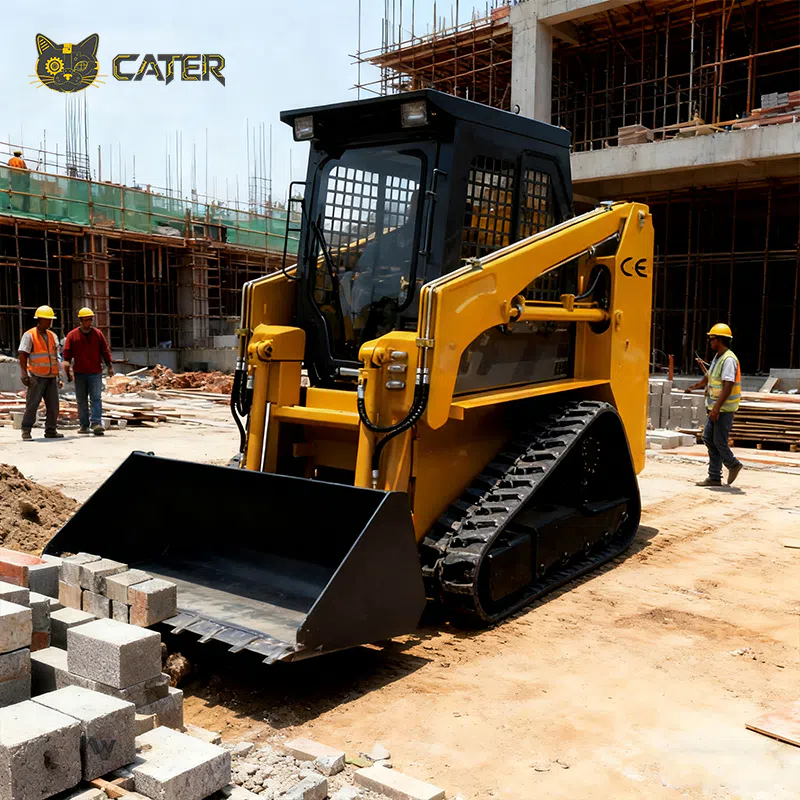
Match the Machine to the Ground and the Route
Define the task and the finished condition
The our page lists 70 kW diesel power and a fully hydraulic working system. These identify the proposed equipment, but the next question is what the site expects the machine to achieve. For a rough formation, define the area and the material movement. For a surface that must meet a design, obtain the required levels, tolerances and checking method from the project team. The product page does not document automatic grade control or certify the accuracy of a finished surface.
The same page lists an operating weight of 3530 kg, shown in the table as a machine weight of 3530 kg. That is the weight of the machine. It is not a rated operating capacity, it is not a payload, and it is not a transport gross weight, and it should not be used as any of those. Width, length and height are not published, and neither are auxiliary hydraulic flow, pressure or bucket capacity, so a route width or a gateway clearance should not be assumed from the loader. Where those dimensions matter, for example at a site entrance, they should be confirmed from drawings or from the supplier rather than estimated from the machine's class.
Keep a record of material destinations as well as machine movements. Material accepted for reuse should go to its agreed storage area; material requiring assessment should not be mixed into a formation simply to clear the route. If the work exposes an unexpected void, obstruction or service, pause the affected task and refer it to the responsible site team. A clearly defined material plan supports the next contractor without implying that the loader has tested the ground.
A Site Brief You Can Hand to the Team
A usable site-preparation brief reads as a description of the ground and the route, not as a specification sheet. It records the area to be cleared, where the stripped material will be stockpiled, the shape the surface is being dressed to, and where the temporary route runs. It names the largest vehicle that will use the route, the turning and loading areas, and the surfaces that have to be firm, even and drained before traffic is allowed. It also states who authorises traffic, who signs off the finished surface, and what conditions stop the earthmoving, such as an unchecked route, a surface that has not been accepted, or a change that has not been passed on to the drivers.
The brief then records the machine information that the plan depends on, and marks it for what it is. Any required reach or clearance needs confirmation against the fitted tool and a configuration drawing. The 3530 kg listed weight is noted as the machine's weight, not its permissible load. Any dimension that the route or the site entrance depends on is listed as needing confirmation from drawings or the supplier. Written this way, the plan keeps production work and acceptance work in their proper places, and it gives the HSE introduction to work equipment and machinery point about task fit a concrete form: the machine is chosen for the task, the guards are checked as complete and sound, users are trained, and a safe system covers cleaning, blockages and repair, with the machine isolated before any adjustment or cleaning and the guards left in place.
That is the practical value of planning site preparation and temporary access as a system. The loader's job — clearing, moving and shaping — is well defined, and the parts of the project that need a different kind of decision, such as whether a surface is accepted for traffic, stay with the people competent to make them. The intended result is a route released for its defined use, with a record that can be updated as the work moves on.
Frequently Asked Questions
Does a tracked skid steer loader remove the need for a site assessment?
No. Tracks change how the machine spreads its weight compared with a wheeled machine, but they do not remove the need to assess the ground, to check that the route is suitable, or to plan drainage and traffic. A machine that can travel over rough ground is not evidence that the ground, the route or the surface is suitable for the vehicles and the work that follow.
Is a levelled area the same as a compacted or load-rated area?
No. Dressing and levelling loose material with a bucket is a shaping task. It does not certify compaction, bearing capacity or drainage, and no number of bucket passes should be read as a compaction result. If the next stage needs a verified surface, that verification is a separate activity with its own method and sign-off.
Can I size the temporary route from the loader?
No. The route should be planned around the largest vehicle that will use it, including visitors. The published page for the example machine does not state its width, length or height, so a route width or a gateway fit should not be assumed from the loader's class; where a dimension matters, confirm it from drawings or the supplier.
Should the temporary route follow the permanent road alignment?
There is no universal answer. A temporary route that follows the final alignment can reduce double-handling, while a route that stays clear of the finished works can avoid damaging them. The choice belongs to the site plan and the local requirements, and the route, whichever it is, still has to be firm, even, drained and wide enough for the largest vehicle.